How to Choose a Mattress Topper for Better Comfort
A long feature list can make comparison harder unless every feature is tied to a real need. For mattress topper, the central use case is changing surface comfort without replacing a mattress. This guide turns that use case into concrete checks so you can compare a small number of realistic options without paying for features that will sit unused.
Define the real job before comparing models
Describe a normal week with mattress topper. Note who uses it, where it will be kept and what problem should become easier. In this category, think specifically about changing surface comfort without replacing a mattress. Turn the description into three essential requirements and three preferences. An essential should eliminate a model when it is missing; a preference should only rank products that already qualify.
This short list protects the decision from impressive but irrelevant features. It also sets a sensible budget ceiling. If a feature does not improve a repeated task, remove a common frustration or prevent a compatibility problem, give it little weight. The money may be better kept or spent on an accessory you will actually need.
Focus on the specifications that change use
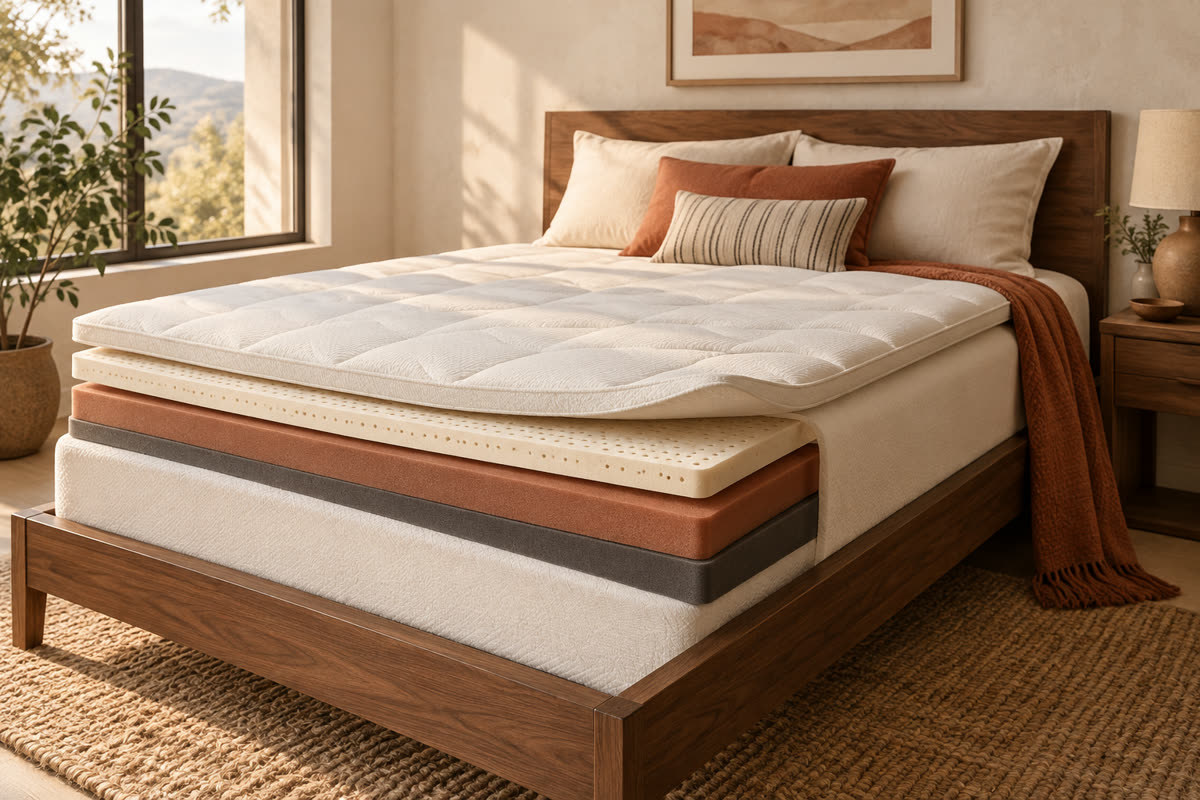
The most useful comparison points are material, thickness, firmness, heat retention, edge feel and cover. Put two or three candidates in a simple table and record the same facts for each. Use manufacturer manuals for dimensions and operating limits, independent measurements for performance, and recent owner reports for recurring practical issues.
Do not assume similar numbers were measured in the same way. Ask what a specification changes in your own routine. A higher figure may improve one task while increasing size, noise, heat, energy use or price. When a seller leaves out an important measurement, treat the missing information as a reason to investigate rather than filling the gap with an optimistic assumption.
Check fit, compatibility and setup
Before ordering, confirm mattress condition, sleeping position, body weight and fitted-sheet depth. Measure the available space and check every item the mattress topper must connect to or work beside. Include adapters, mounts, cables, apps and accounts. If a required extra is not in the box, add both its price and the added setup friction to the comparison.
Read the return window and warranty rules for your location. Save the exact model number because products with nearly identical names may use different parts or features. This is also the moment to check whether service, refills and replacement components will remain available where you live.
Choose the trade-off you can live with
No mattress topper is best in every dimension. The important compromise here is that thicker foam changes pressure relief but can trap heat and hinder movement. Decide which side matches your environment. A modest model designed around the right constraint can be more useful than a premium model optimized for a different user.
Avoid using a topper to hide structural mattress failure. Look for evidence that matches the exact version and the way you plan to use it. A single glowing review or angry complaint is less useful than a repeated pattern supported by clear conditions. Check the date of each source because hardware, software and included accessories can change during a product’s life.
Budget for ownership, not only checkout
Add consumables, replacement parts, subscriptions, accessories and expected energy use to the purchase price. Estimate the first year of ownership rather than comparing only the number shown on the product page. A cheaper model can be expensive when essential supplies are proprietary, while a higher initial price may include items you would otherwise buy separately.
Plan the maintenance routine before purchase: air it out, rotate if recommended and wash the cover correctly. If care is awkward, it is likely to be postponed, which can reduce performance and shorten useful life. Clear instructions and readily available parts are practical features even when they never appear in a headline specification.
The five-question decision check
Before buying, ask: Does this mattress topper solve the problem I described? Does it meet every essential requirement? Will it fit and work with my current setup? Have I counted the full ownership cost? Can I accept its main compromise? If one answer is unclear, pause and find the missing information.
Once two or three candidates pass the same checklist, choose the one with the clearest fit and stop searching. Sometimes the strongest conclusion is to keep using what you already own. A good purchase is not the product with the most impressive page; it is the one that performs a useful job with predictable effort and cost.